Is It a Bird, Is it a Plane?

It is a Mysterious Plain of Jars,,,
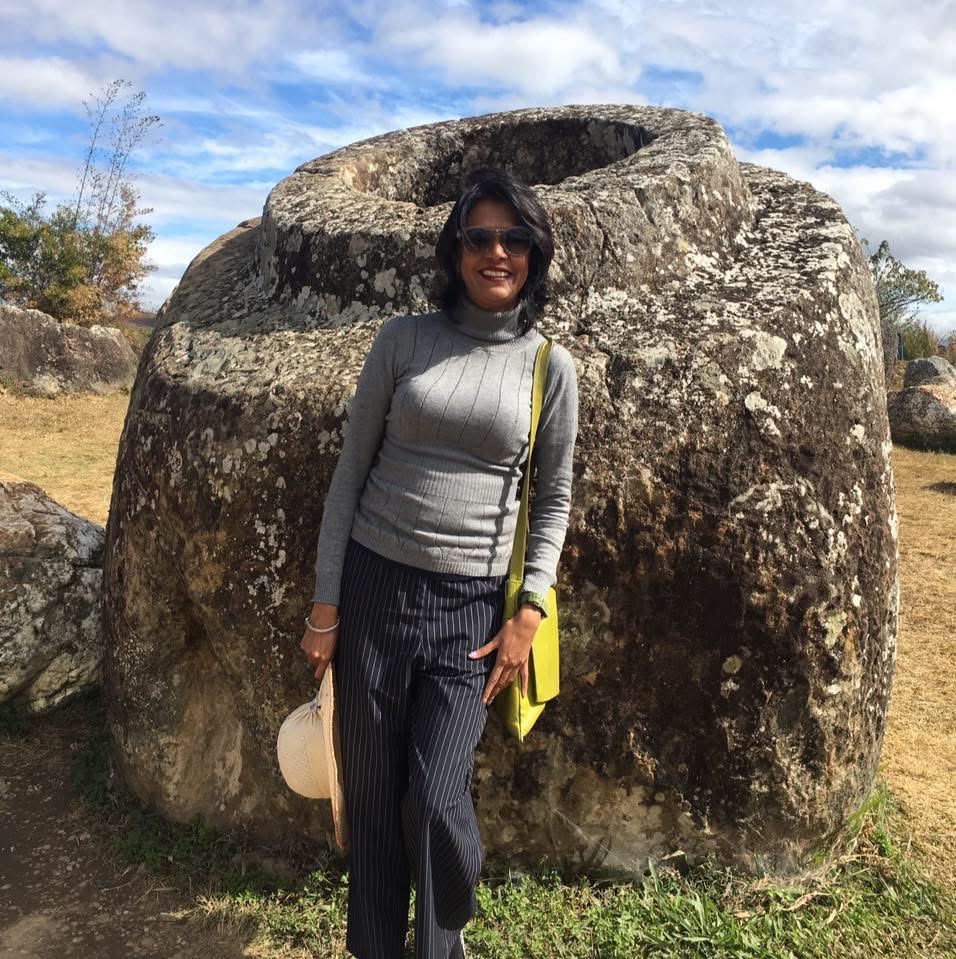
This mysterious jar was taller than me

Going to the Plane of Jars is not easy. I am not just referring to the arduous road journey to get to Xiengkhuong. It is tricky to see the Jars even when you are in  Xiengkhuong . And the reason for that is a 3 letter word. UXO. 

UXO is an abbreviation for  Unexploded Ordnances. And the little country of Laos is full of them. This is due to its unfortunate location between North Vietnam and Myanmar. According to the non-profit organisation Mines Advisory Group (MAG), between 1964 and 1973 more than 270 million tonnes of cluster bombs were dropped by the US forces in Laos to disrupt supply routes of the Viet Congs of North Vietnam. That’s one bomb every 8 minutes. This made Laos the most bombed country in the world . Close to 30% of these bombs did not explode and continue to lay embedded in the fields and forests posing  severe danger to the people and animals of Laos. So when you walk across the fields to visit the Plane of Jars and you come across a black and white stone ( which is a sign left by MAG volunteers who are involved in clearing landmines), you know that there were UXOs there and you need to walk on the white side of the stone.

So on a sunny winter’s morning, we left our hotel to visit the Plane of Jars. There are over 90 sites in Xiengkhuong Province. Of these,about 7 have been cleared of UXOs by the MAG volunteers.
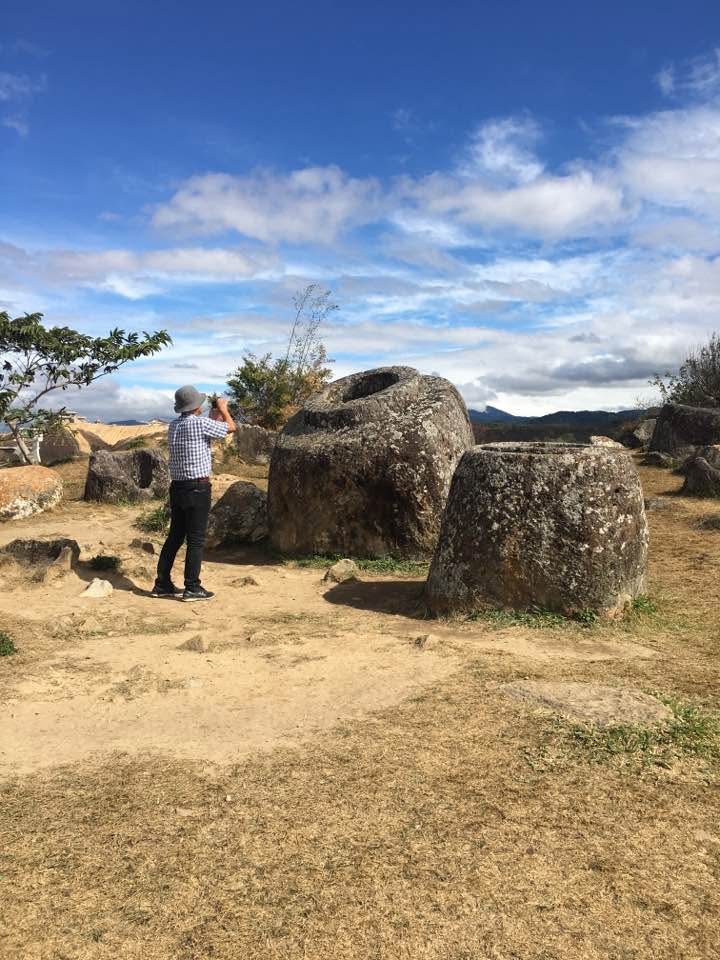
The site number 3 in the Plain of Jars

We went to Site 3 first. It was a big plateau  filled with hundreds of stone jars  Some of them were less than two feet  in height but several were more than 3 metres high. Some were broken but a sizeable number were still intact. There were several lids as well. Our guide told us that there are several theories concerning these strange jars.

Alien Theory : According to this theory, these jars were remnants of an alien civilisation . This theory suggests that these jars were left by aliens to provide visible markers for spaceships to land in this area. This reminded me of the strange Nazca Lines of Peru ( you can read about my visit to the Nazca lines in my Peru travels)

Wine Theory : This theory suggests that these jars were actually storage items of an ancient civilisation. The different jars were used to store rice wine and rice beer.  I quite liked the idea of a 3 metre jar filled with wine. Such a treasure for a rainy day…

Brick Kiln : Simple theory that these jars are remnants of brick kilns of prehistoric times, 

Burial Chambers : This theory, forwarded by French and Laotian archaeologists, suggests that these jars were remnants of burial chambers of important people and their families. It seems that in between 1200 and 600 BC, the Laotian tribes would cremate their dead and then store the ashes in large jars that acted as urns. This explained why most of the jars were broader at the bottom and narrower at the top.

I will tell you the correct answer. It is most likely to be theory 4. The Plane of Jar is a gigantic burial chamber of prehistoric Laos. But I still like the Wine Theory. And it is definitely a site worth visiting
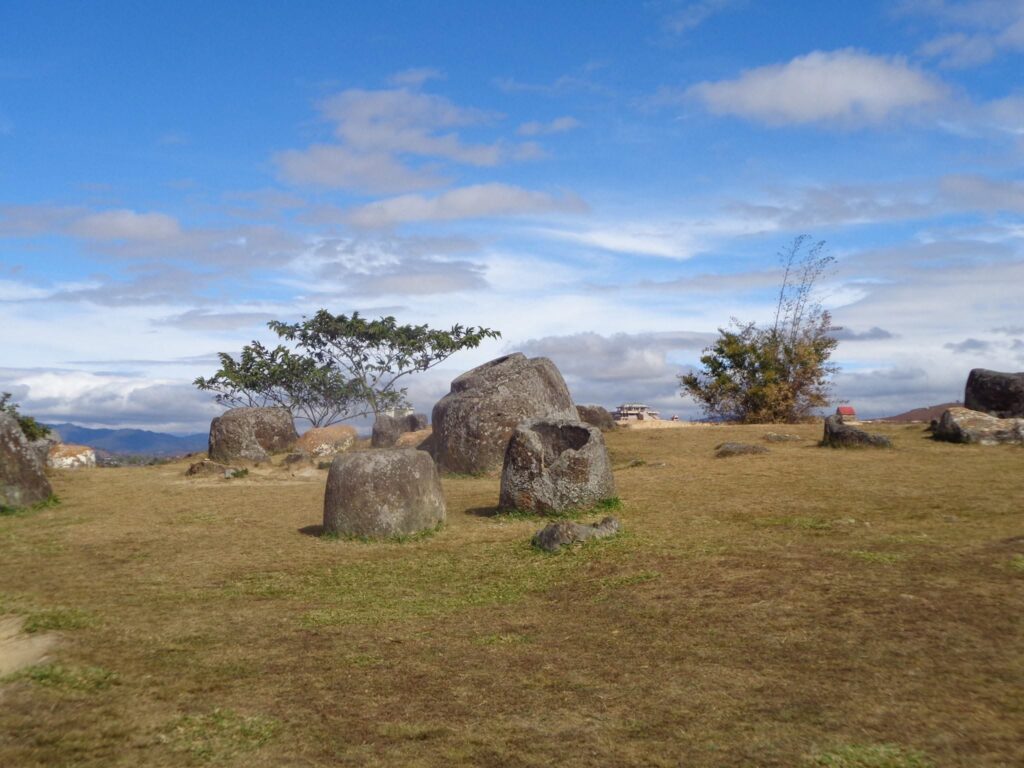
Mysterious Plain of Jars

The Long Drive to the Plain of Jars

look its a plain of jars….very large ones

I am fascinated by the unknown. So when I heard about the mysterious Plain of Jars many years ago, I had made up my mind to visit it if I ever went to Laos.. The Plain of Jars is a vast area in the Xinxiang province in North Laos comprising of jars made of rock. Many theories surround these jars and curious me had to go see them..</p>

A trip to the Plain of Jars proved tricky because one has to take a long journey by road from Luang Prabang to Xinxiang. Opting for the local bus, I found that there were couple of choices that left early in the morning. Some wise soul advised me to pay a little extra and buy tickets that had designated seats since most buses in Laos do not have that and this was going to be long journey on some pretty unpalatable roads. So I reluctantly spent a little bit more on the bus ticket for the next day. I promptly arrived at the bus stop at 6am the next day and decided to buy some snacks and drinks for the 6 hour journey. I naturally assumed that the bus would be stopping somewhere for breakfast or lunch. 

When I boarded, I found that my seat was taken (the one for which I paid that premium). As all attempts to claim my seat proved futile, I did the next best thing…I quietly sat in someone else’s  seat. Soon enough, a German couple boarded the bus and were surprised to find me on their seat. They too followed my path and sat in another ‘designated seat. This trend continued and soon the bus was almost full and our driver took off (only 10 minutes  after the scheduled departure time). I was delighted. So everyone is not on elastic time in Laos after all.

My euphoria was short-lived. After travelling for 500 metres, the bus driver rolled into a petrol station.. The chatty Frenchman siting next to me explained that in Laos, the local buses can only fuel up after they have collected money from the passengers!!! After a 20 minute stop for fuel, we chugged ahead. Every 20 minutes, somebody would be signalling to the driver to stop and a new passenger would board the bus, There are apparently no scheduled stops in Laos. Likewise, if anybody needed to take bio break, they would just casually slide up to the driver and he would immediately slam the brakes. The passenger would run to the nearest bush and everybody patiently waited for him.

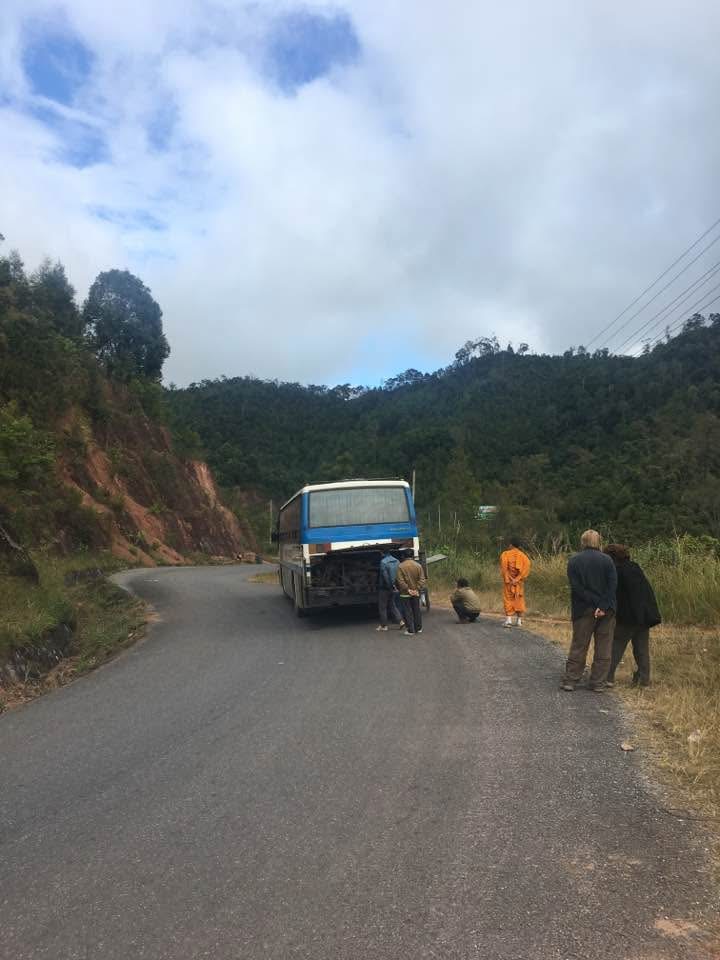
We soon left the city and entered a mountainous region. The traffic was very sparse and we hardly saw any vehicles.. The bus chugged on for the next few hours, stopping to pick up people or download them. Then all of sudden it came to a screeching halt. I thought we had arrived at our lunch spot but found that we were in the middle of nowhere (literally). The driver and his helper got off and began investigations into the fuel tank. Apparently there was a leakage and the tank has emptied.  Now all the locals got off the bus and only the five foreigners remained. The locals had nicely settled by the roadside and started playing the radio on their  mobile phones. So we were surrounded by different strains of Laotion music. Few people started a small picnic. The German couple came over to my seat to check if I knew how much time this would take. I decided to go and check with the driver. Armed with my brilliant sign language skills I asked how far we were from our destination? Is it 10 Km? He nodded yes! I was a little doubtful. So I said, it it 5 km? He nodded yes again. That is when I knew that my future as an interpreter was not very bright,  While the foreigners were getting worried, the locals seemed to not have a care in the world. It seems that breakdowns are very common in Laos as most commercial vehicles are very poorly maintained, 

Endless waiting in the mountains when the bus broke down for the 3 rd time

We were now stranded for over 3 hours and the mountain air was getting more chilly After what seemed like ages, our helper hitchhiked on a two wheeler and manage to get a can of fuel from a nearby station. But then we discovered that we did not have a pipe to put it into the bus tank! Eventually a passing car gave that to our driver and the bus was refuelled to take us to the nearest gas station. I don’t remember praying so hard for an uneventful journey.  My prayers were answered and we managed to  refuel at the station and carry on till Xinxiang without any more incident. Finally, a full 12 hours after our start, we arrived at our destination around 630pm. With no energy to haggle, I agreed to the crazy rate that the local taxi driver demanded to take me to my hotel. MY last thought before I retired for the night were that this Plain of Jars better be worth all this trouble

To know more about the Plain of Jars, read my next post!!!